Introduction
Anxiety and stress often intertwine, yet they represent distinct emotional landscapes that can significantly affect an individual’s well-being. Many individuals grapple with the physical manifestations of anxiety-such as a racing heart or muscle tension-symptoms that can arise even in the absence of conscious anxious feelings.
This article delves into the complexities of experiencing anxiety without overtly feeling anxious, shedding light on the nuances that differentiate anxiety from stress. Understanding these differences is crucial for effective management and care.
How can one navigate this often-overlooked aspect of mental health? By recognizing the signs and employing strategies to address them effectively, individuals can restore balance and clarity in their emotional lives. Here’s how to approach this:
- Identify the symptoms and their impact on daily life.
- Understand the underlying biological and psychological factors.
- Act by implementing evidence-based strategies for management.
Let’s explore these insights further.
Defining Anxiety and Stress: Key Characteristics
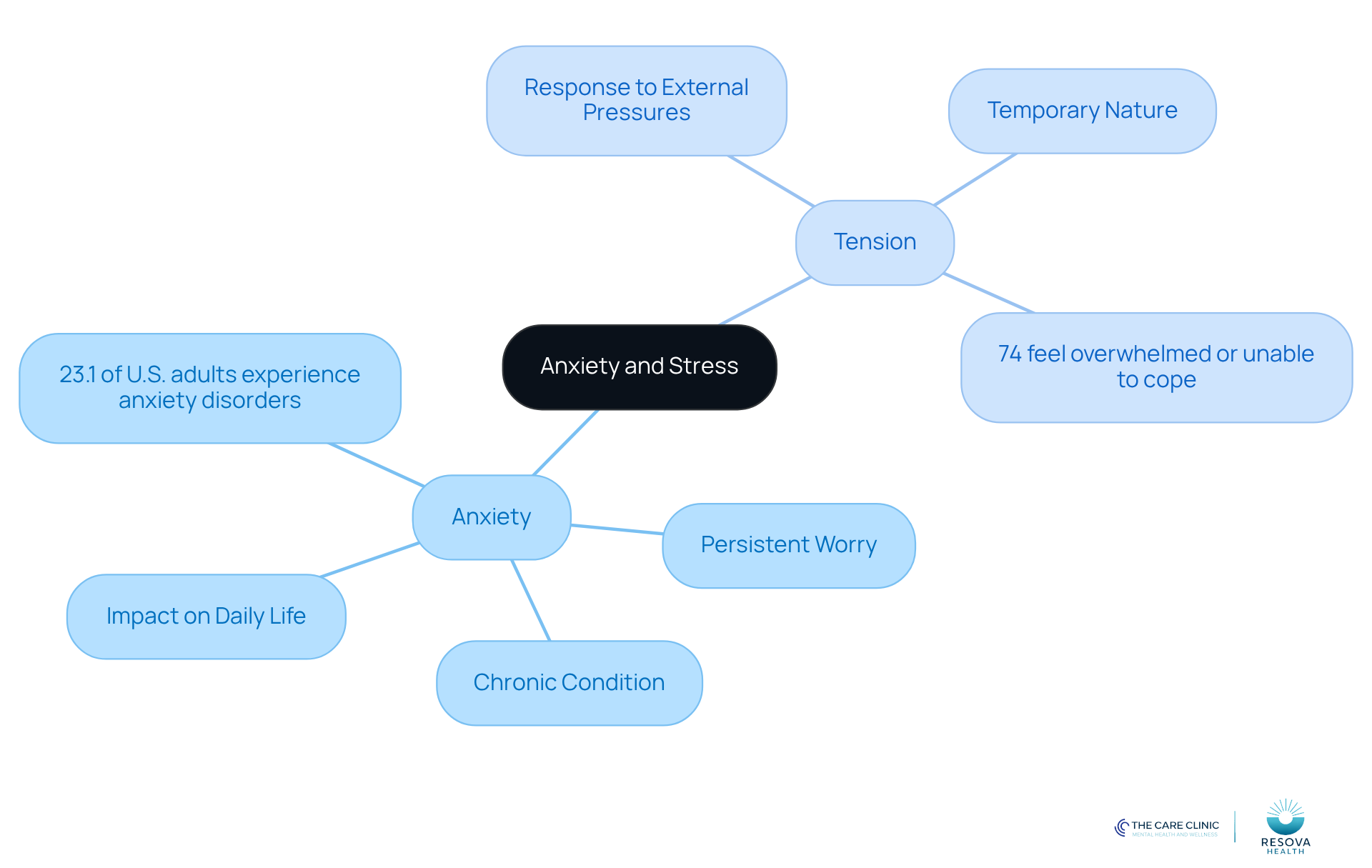
Anxiety and tension, while often conflated, are distinct emotional states with unique characteristics. Anxiety is characterized by persistent feelings of worry, fear, or unease, leading one to wonder, can you get anxiety without feeling anxious? It often manifests as a chronic condition, significantly impacting daily functioning and overall quality of life. For instance, approximately 23.1% of U.S. adults experience anxiety disorders, yet only about 27.6% receive treatment, highlighting a substantial gap in care.
On the other hand, tension typically arises in response to external pressures or challenges, such as deadlines or significant life changes. It is generally temporary, dissipating once the stressor is removed. Recent studies show that 74% of individuals reported feeling overwhelmed or unable to cope due to pressure in the past year, with many citing financial burdens and housing concerns as significant factors.
Mental health experts emphasize the importance of acknowledging these variations, as both unease and pressure can coexist and exacerbate one another. For instance, 61% of adults who reported tension also experienced unease, demonstrating how pressure can activate or worsen anxiety symptoms. Understanding these distinctions is vital for effective management and treatment, especially when considering whether can you get anxiety without feeling anxious, allowing individuals to seek appropriate support tailored to their specific experiences.
Contrasting Symptoms: How Anxiety and Stress Manifest
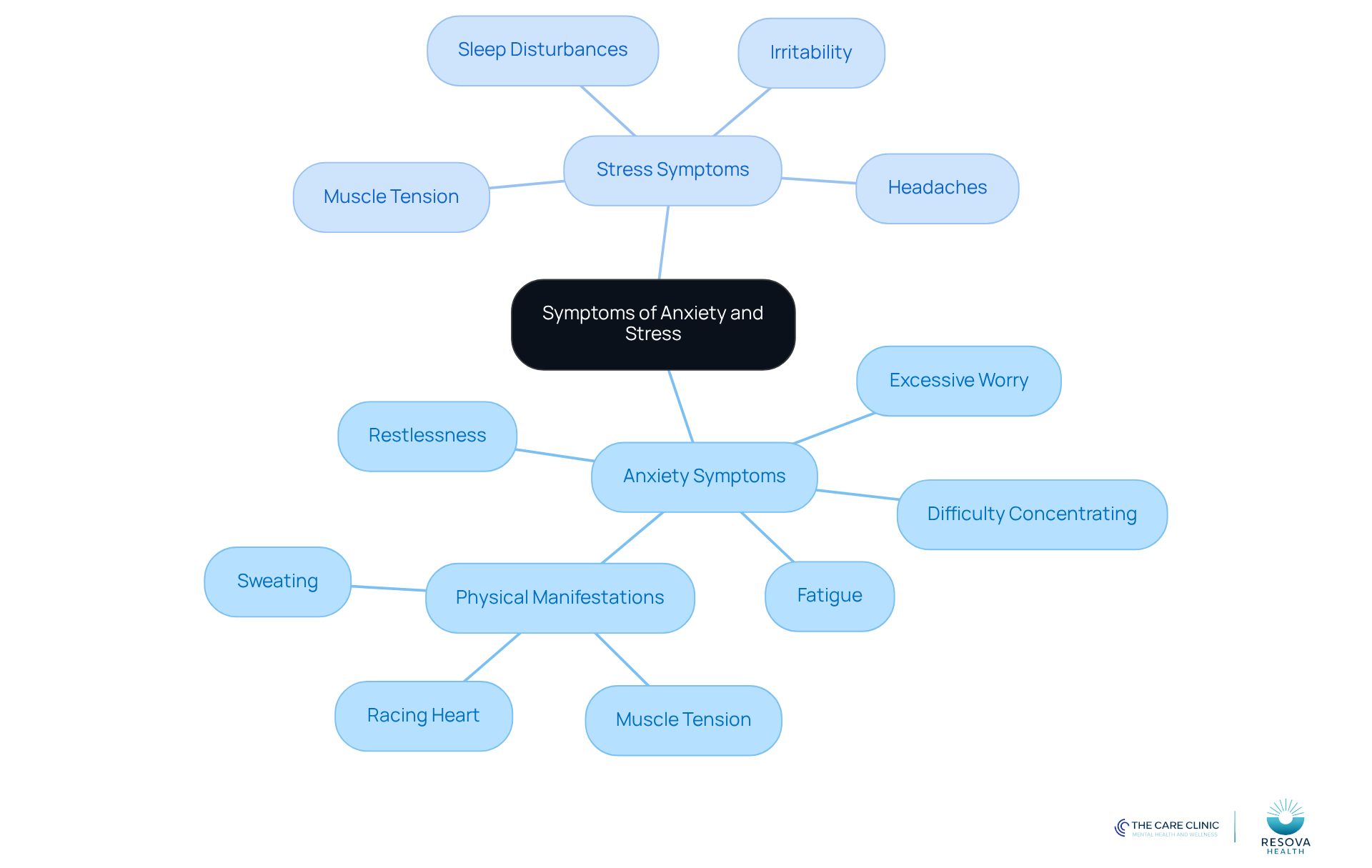
Understanding the signs of nervousness and pressure is crucial for mental health. Anxiety symptoms often include excessive worry, restlessness, fatigue, difficulty concentrating, and physical manifestations like a racing heart or sweating. In contrast, tension symptoms frequently present as irritability, muscle tension, headaches, and sleep disturbances.
While stress can escalate into worry if it persists, it raises the question: can you get anxiety without feeling anxious, since worry can occur independently of any identifiable stressor? For instance, a study on generalized anxiety disorder (GAD) highlights that individuals may wonder, can you get anxiety without feeling anxious, as they experience ongoing distress that disrupts daily life without a clear external cause. Recognizing these signs is essential for achieving a deeper understanding of mental well-being.
Mental health disorders affect approximately 31.9% of teenagers aged 13 to 18, often leading to poor academic performance and social isolation if not addressed. By distinguishing between worry and stress, individuals can seek appropriate assistance and therapy, ultimately fostering improved mental health outcomes.
Exploring Anxiety Without Anxious Feelings: A Deeper Look
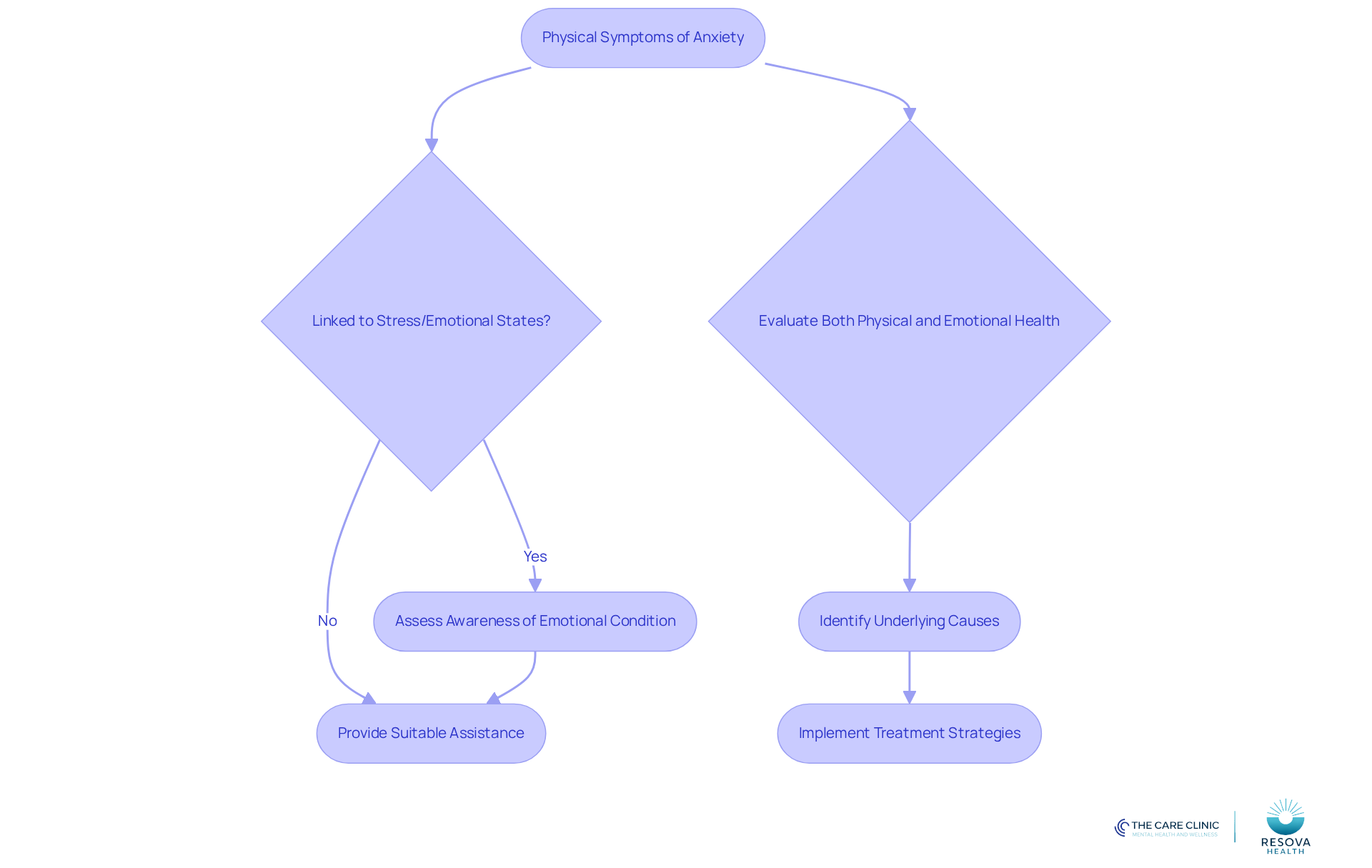
Individuals can experience physical symptoms of anxiety, such as increased heart rate, sweating, or muscle tension, leading to the question, can you get anxiety without feeling anxious. This disconnect often arises from subconscious stress, prompting the question: can you get anxiety without feeling anxious, as the nervous system becomes hyperstimulated, leading to physiological responses that may go unnoticed?
Many people struggle to identify their stress due to a lack of awareness about their emotional condition. This complicates both diagnosis and treatment. For instance, an individual may feel a racing heart or muscle tension in stressful circumstances, leading to the question of can you get anxiety without feeling anxious.
Here’s what’s happening: the body reacts to stress, which leads to the question of whether can you get anxiety without feeling anxious. This emphasizes the essential requirement for thorough mental health evaluations that consider both physical symptoms and emotional understanding.
Next step in treatment: clinicians should ensure that individuals receive suitable assistance and care, addressing both the physiological and psychological aspects of anxiety. By fostering awareness and understanding, we can bridge the gap between physical symptoms and emotional health, leading to more effective care.
Coping Strategies and Treatment: Addressing Anxiety and Stress
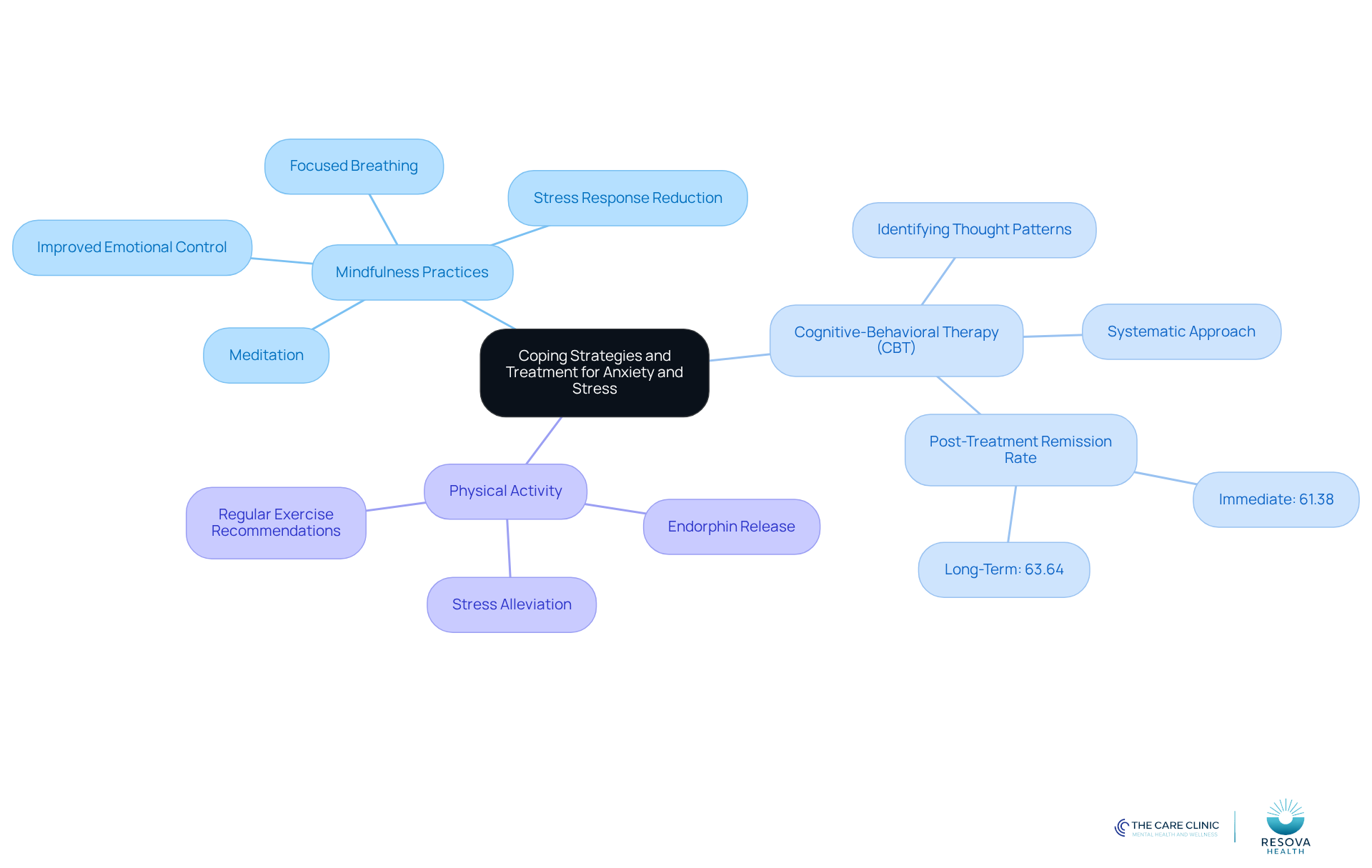
A common challenge in daily life is managing worry and tension, and it raises the question: can you get anxiety without feeling anxious? Effective coping strategies include mindfulness practices, cognitive-behavioral therapy (CBT), and regular physical activity.
Mindfulness methods, such as meditation and focused breathing, help individuals ground themselves in the present moment, which can greatly lower stress levels. Research indicates that mindfulness can reduce the body’s tension response, leading to improved emotional control and overall well-being.
CBT is a systematic therapeutic approach that enables individuals to identify and modify detrimental thought patterns contributing to stress and worry. Studies show that CBT boasts an impressive success rate, with immediate post-treatment remission rates around 61.38% and long-term follow-up remission rates averaging 63.64%.
In addition, engaging in regular physical exercise is crucial, as it releases endorphins that enhance mood and alleviate stress symptoms. While therapy and lifestyle changes are essential, medication-such as antidepressants or anti-anxiety medications-may also be necessary for some individuals, particularly in more severe cases. A combined approach of therapy, physical activity, and medication often yields the most effective results in managing anxiety, prompting the inquiry: can you get anxiety without feeling anxious?
At Resova Health, we provide accessible online mental wellness counseling services that offer flexible, confidential support from licensed professionals anytime, anywhere. Our platform ensures that you can connect with leading mental wellness specialists around the clock, receiving the same high-quality care as in-person appointments. With privacy guaranteed, you can engage in counseling from the comfort of your home, making it easier to incorporate these coping strategies into your daily life. Whether you require regular appointments or urgent care, our services are designed to meet your needs and help you establish a consistent support system for effective long-term mental health management.
Conclusion
Understanding the nuances between anxiety and tension is crucial for effective mental health management. Anxiety can exist independently of identifiable stressors, challenging the perception that it always manifests as anxious feelings. This complexity highlights the need for clarity in distinguishing these emotional states.
Key distinctions between anxiety and stress are essential for individuals seeking appropriate support and treatment. Anxiety often presents as chronic worry, while tension typically arises from external pressures and is usually temporary. Recognizing these differences is vital for effective mental health evaluations that address both physical symptoms and emotional well-being.
Fostering awareness about the interplay between anxiety and tension enhances mental health outcomes. By adopting effective coping strategies such as:
- Mindfulness
- Cognitive-behavioral therapy
- Physical activity
Individuals can better manage their mental health. Understanding the complexities of anxiety without anxious feelings empowers individuals to seek help and encourages a compassionate approach to mental health care.
Frequently Asked Questions
What is the difference between anxiety and tension?
Anxiety is characterized by persistent feelings of worry, fear, or unease, and often manifests as a chronic condition impacting daily functioning. Tension, on the other hand, typically arises from external pressures or challenges and is generally temporary, dissipating once the stressor is removed.
How common are anxiety disorders among U.S. adults?
Approximately 23.1% of U.S. adults experience anxiety disorders.
What percentage of individuals with anxiety disorders receive treatment?
Only about 27.6% of individuals with anxiety disorders receive treatment, indicating a significant gap in care.
What are some common causes of tension reported by individuals?
Common causes of tension include deadlines, significant life changes, financial burdens, and housing concerns.
How do anxiety and tension interact with each other?
Anxiety and tension can coexist and exacerbate one another. For example, 61% of adults who reported tension also experienced unease, showing that pressure can activate or worsen anxiety symptoms.
What percentage of individuals reported feeling overwhelmed due to pressure in the past year?
Recent studies show that 74% of individuals reported feeling overwhelmed or unable to cope due to pressure in the past year.
Why is it important to understand the distinctions between anxiety and tension?
Understanding the distinctions is vital for effective management and treatment, allowing individuals to seek appropriate support tailored to their specific experiences.
List of Sources
- Defining Anxiety and Stress: Key Characteristics
- Anxiety disorders (https://who.int/news-room/fact-sheets/detail/anxiety-disorders)
- Facts & Statistics (https://adaa.org/understanding-anxiety/facts-statistics)
- Stress: statistics (https://mentalhealth.org.uk/explore-mental-health/statistics/stress-statistics)
- 100 Anxiety Quotes to Help Calm Your Mind on Tough Days (https://today.com/life/quotes/anxiety-quotes-rcna126836)
- Quick Facts and Statistics About Mental Health | Mental Health America (https://mhanational.org/resources/quick-facts-and-statistics-about-mental-health)
- Contrasting Symptoms: How Anxiety and Stress Manifest
- Facts & Statistics (https://adaa.org/understanding-anxiety/facts-statistics)
- Science Updates About Anxiety Disorders (https://nimh.nih.gov/news/science-updates/anxiety-disorders)
- Could This Novel Therapy Calm Anxiety for Millions of Americans? (https://ucsf.edu/news/2025/10/430796/could-novel-therapy-calm-anxiety-millions-americans)
- American Adults Express Increasing Anxiousness in Annual Poll; Stress and Sleep are Key Factors Imp (https://psychiatry.org/news-room/news-releases/annual-poll-adults-express-increasing-anxiousness)
- Annual Mental Health Poll Reveals Americans Anxious About Current Events; 40% of Employed Worried (https://psychiatry.org/news-room/news-releases/annual-mental-health-poll-2025)
- Exploring Anxiety Without Anxious Feelings: A Deeper Look
- It’s Exhausting. 16 Quotes Illustrating Life with Anxiety (https://ybgr.org/its-exhausting-16-quotes-illustrating-life-with-anxiety)
- Subconscious Anxiety: Symptoms, Causes, and Treatment (https://psychcentral.com/anxiety/is-your-subconscious-making-you-anxious)
- The burden of anxiety among a nationally representative US adult population (https://sciencedirect.com/science/article/pii/S016503272300530X)
- Coping Strategies and Treatment: Addressing Anxiety and Stress
- Daily mindfulness practice reduces anxiety for autistic adults (https://news.mit.edu/2025/daily-mindfulness-practice-reduces-anxiety-autistic-adults-0513)
- Mindfulness meditation: A research-proven way to reduce stress (https://apa.org/topics/mindfulness/meditation)
- Famous Quotes on Stress and Well-Being – Center for the Advancement of Well-Being (https://wellbeing.gmu.edu/famous-quotes-on-stress-and-well-being)